NDIS Growth Audit Checklist: 160 Checks to Find Your Biggest Gaps
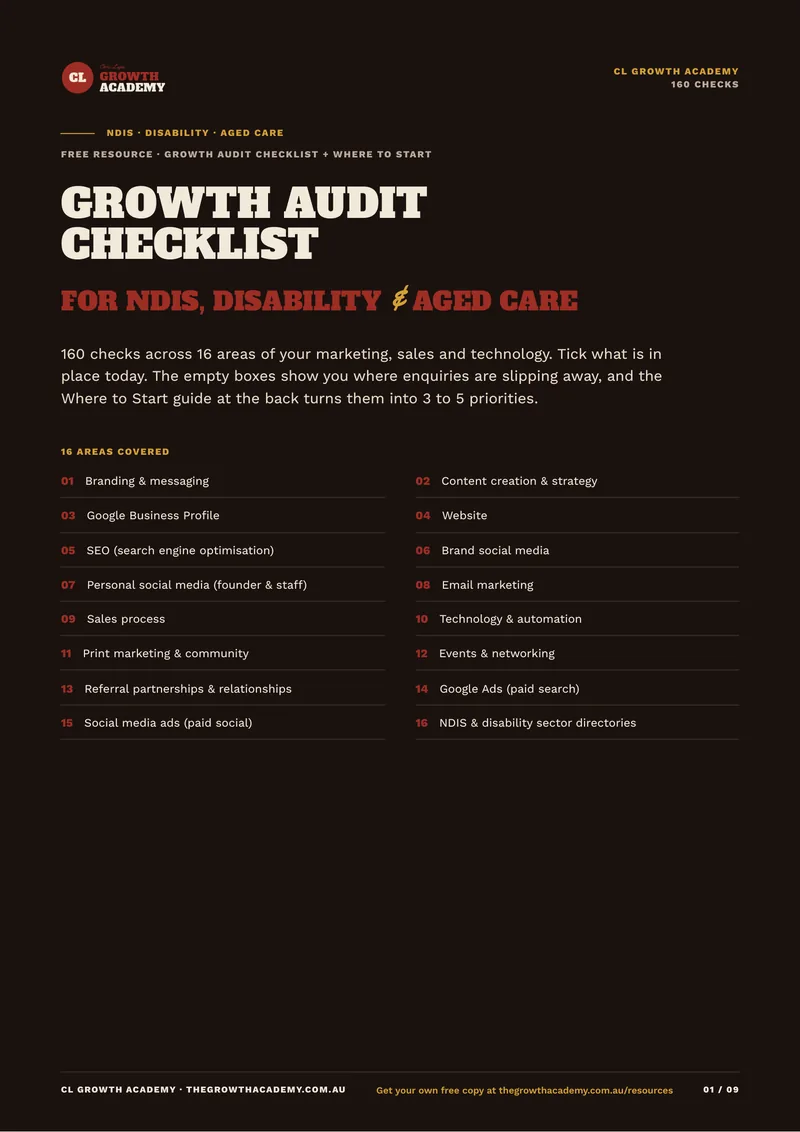
The Growth Audit Checklist is 160 yes or no checks across 16 areas of an NDIS or aged care provider's marketing, sales and technology. Tick what is in place today, and the empty boxes show you where enquiries are slipping away. The Where to Start guide then turns those gaps into 3 to 5 priorities.
What does the growth audit checklist cover?
Short answer: The checklist covers 16 areas of an NDIS or aged care provider's growth, with 10 yes or no checks in each: branding, content, Google Business Profile, website, SEO, brand and personal social media, email, sales process, technology, print and community, events, referral partnerships, Google Ads, social ads and sector directories.
Every check is a plain statement. Tick it only if it is true today. The full list is below, and the PDF version has tick boxes, a score line for each area and the Where to Start guide.
01 Branding & messaging
- A clear, unique value proposition is written down.
- The business has a documented brand story and mission.
- The language is specific to your business, not generic sector jargon.
- Testimonials, success stories or case studies are collected all the time.
- There are clear key messages for each audience (clients, families, support coordinators).
- One visual identity (logo, colours, fonts) is used everywhere.
- Photos and videos show real staff and clients, with consent.
- Your tone of voice is written down and used consistently.
- A referral partner value proposition is defined and shared.
- The business has a clear, memorable name and online presence.
02 Content creation & strategy
- There is a 30 to 60 day content plan.
- There is a way to capture content ideas from the team.
- Content is repurposed across channels.
- Content answers real questions from your audience.
- There is a simple way to capture photos and video (a phone is fine).
- Blog posts or guides are published at least monthly.
- Content mixes educational, personal and promotional posts.
- There is a process for collecting written and video testimonials.
- AI tools are used regularly for ideas, drafting or editing.
- Every piece of content has one clear next step.
03 Google Business Profile
- The profile is complete and verified.
- At least 10 good photos are uploaded.
- There is a process to ask for new reviews.
- Every review gets a reply, using a template for positive and negative.
- Posts go up weekly with updates, news or new services.
- The Q&A section is checked and answered promptly.
- Hours, phone number and address are correct.
- The primary and secondary categories are correct.
- The website link and a clear call to action are included.
- The business has at least 5 reviews.
04 Website
- Pages load in under 3 seconds.
- A clear message is visible without scrolling.
- Testimonials or case studies are easy to find.
- An enquiry form or clear next step is on every key page.
- The site is easy to navigate on a phone.
- Copy is plain, human language about what clients need.
- Each service has its own page.
- Contact details are easy to find.
- The site is secure (HTTPS).
- Staff can update content without a developer.
05 SEO (search engine optimisation)
- You rank on page one of Google for your main local services.
- 5 to 10 key search terms are chosen and tracked.
- The website is set up in Google Search Console.
- There is a page for each key service and location.
- Every image has descriptive alt text.
- Google Analytics is set up and working.
- Other local businesses and organisations link to your website.
- New content is based on the questions people ask.
- The navigation is laid out logically.
- Pages use a clear heading order (H1, H2, H3).
06 Brand social media
- You post at least 3 times a week.
- Posts mix educational, personal and promotional content.
- Posts show the people behind the business, not stock photos.
- Profiles are complete, with a clear description and a website link.
- Comments and messages get a reply within 24 hours.
- The business engages with other pages in the community.
- Content is repurposed across platforms.
- Your message is the same on every platform.
- Posts mix images, video and text.
- The business joins relevant sector conversations.
07 Personal social media (founder & staff)
- The founder and key staff are active online (for example, LinkedIn).
- They share personal insights and sector expertise.
- Their profiles are complete and link to the business.
- They engage with sector professionals and potential partners.
- They share the business's content with their own network.
- They are seen as trusted experts in their field.
- Their personal brand lines up with the business.
- Their activity is steady, not on and off.
- They are visible in online communities and groups.
- They share stories and experiences that build trust.
08 Email marketing
- There is a process for collecting emails.
- There are separate lists for clients, staff and referral partners.
- A regular newsletter or update goes out.
- New subscribers get an automatic welcome email.
- Emails are personal and useful, not only sales messages.
- There is a simple way to see how each email performed.
- Emails include stories, updates and helpful resources.
- You use a dedicated email tool.
- Emails are checked on a phone before sending.
- The sender name is a person, not just the business name.
09 Sales process
- There is a written, step-by-step process for new enquiries.
- Staff are trained in that process.
- A set list of questions is used to understand each person's needs.
- People who don't book straight away get followed up.
- One named person owns every new enquiry.
- Every enquiry is tracked, whether it becomes a client or not.
- Staff know what to say and what to send.
- Service agreements are presented the same way every time.
- The process is reviewed and improved regularly.
- There is a clear onboarding process for new clients.
10 Technology & automation
- A CRM or database holds every contact.
- Repetitive tasks are automated (for example, first email replies).
- Everyone knows how to use the key tools.
- A booking tool (such as Calendly) makes it easy to book calls.
- There is a system for managing reviews and feedback.
- A simple project management tool runs team workflows.
- AI is used regularly to improve content or processes.
- Tools are connected (website forms feed the CRM).
- Invoicing and timesheets are automated.
- The tool stack is reviewed regularly to find savings.
11 Print marketing & community
- Brochures and flyers have one clear message and one call to action.
- There is a plan for where print materials go.
- Print shows real people from your business, not stock photos.
- You know which local community groups to work with.
- There is a plan to sponsor a local event or team.
- Key staff speak at local community centres or events.
- There is a way to get a mention in local media.
- Every print piece has a QR code to a specific web page.
- A small budget is set aside for print or signage.
- Staff are encouraged to represent the business locally.
12 Events & networking
- Every event you attend or exhibit at has a clear goal.
- Key staff can introduce the business in a few sentences.
- Everyone you meet is followed up within 48 hours.
- There is a professional pull-up banner and printed materials.
- Contact details and follow-up consent are collected properly.
- You attend a mix of sector and community events.
- There is a plan for disability and aged care expos.
- The founder or key staff go to local networking coffees.
- You track which events bring in enquiries.
- You list the people you want to meet before each event.
13 Referral partnerships & relationships
- You have a list of 10 to 20 key referral partners (support coordinators, allied health).
- You check in with them on a regular rhythm.
- A referral partner value proposition is written and shared.
- You thank every partner for every referral, the same way each time.
- Referrals are tracked and reported.
- Key staff are trained to build these relationships.
- You host or co-host small, informal partner events.
- A one-page document explains your services and how to refer.
- There is a clear referral pathway for each type of client need.
- You keep looking for new partners.
14 Google Ads (paid search)
- Target keywords are chosen and reviewed regularly.
- Ad copy speaks directly to what people are searching for.
- Ads land on relevant pages built to get enquiries.
- Conversion tracking is set up correctly and checked.
- A daily or monthly budget is set and kept to.
- Negative keywords are added regularly to stop wasted spend.
- Assets are set up (calls, sitelinks, callouts).
- Campaigns are split by service and location.
- Cost per enquiry is checked regularly.
- Ads run at the times enquiries come in.
15 Social media ads (paid social)
- You use the platforms your audience is on.
- Targeting (location, interests, behaviours) is precise.
- Images and video are good quality and use real people.
- Ad copy has a clear call to action.
- Each campaign has a budget that is set and checked.
- The Meta pixel or equivalent is installed for tracking and retargeting.
- Each campaign has a clear objective (enquiries, traffic).
- Different images and copy are tested against each other.
- Lead forms are short and easy to fill in.
- Cost per lead is reviewed regularly.
16 NDIS & disability sector directories
- The business has a complete, current listing on the Kismet marketplace.
- The business has a complete, current listing on MyCareSpace.
- The business has a complete, current listing on Find a Carer (which took over Clickability in 2025).
- The business is listed on the NDIS Provider Finder (if registered).
- The business has a Hireup profile (if relevant for support workers).
- Listings on other regional or specialist directories are claimed and updated.
- Each listing describes your services and what makes you different.
- Phone, email and website are correct on every listing.
- Listings include good photos and video.
- There is a process to ask for and manage reviews on these sites.
How do I score the growth audit?
Short answer: Count the ticks in each area, out of 10. 8 to 10 is strong, so keep it up. 5 to 7 is the area to fix next. 0 to 4 is a priority gap. The bands are a guide, not a test: they show you where to look first, then the Where to Start guide turns that into a plan.
| Ticks in the area (out of 10) | What it means | What to do |
|---|---|---|
| 8 to 10 | Strong | Keep it up, and check it again in 6 months |
| 5 to 7 | Fix next | Pick the easiest empty boxes and finish them |
| 0 to 4 | Priority gap | Look here first when you choose your 3 to 5 priorities |
This is how I use the checklist with providers: score each area, find the quick wins, then build the short, medium and long-term plan from there.
How do I use the checklist?
Work through all 16 areas in one sitting, then use the Where to Start guide to choose what to fix first.
- Tick what is true today. Be honest. A check you are halfway through stays empty.
- Count the ticks in each area and write the score out of 10. The areas with the lowest scores are where enquiries are slipping away.
- Set one clear goal. Something like "fill 2 SIL vacancies in the next 3 months", not "more clients".
- Use the Where to Start guide. Six steps take you from 160 checks to 3 to 5 priorities, each with an owner, a deadline and a way to measure it.
The quick wins are usually easy to spot once the boxes are ticked. One I fix with almost every provider: "making it very clear that there's a referral pathway and an inquiry pathway." A referrer and a family need different forms and different buttons.
For the full method behind the checks, read how to get NDIS clients, then build your NDIS marketing strategy.
Who is the checklist for?
Owners, executives and marketing staff at NDIS, disability and aged care providers. If you have a marketing person or an offshore team, give them the checklist and ask them to tick it on their own, then compare answers.
The NDIS had 792,304 active participants at 30 September 2026 (NDIA Quarterly Report Q1 2026-27). Each of those people, and the families and support coordinators who help them choose, can compare providers before they get in touch. The checklist shows what they find when they look at you.
Get the Growth Audit Checklist free
You get the checklist, the Where to Start guide and the worksheet as one PDF, plus every other resource in the library.
FAQ
How long does the growth audit take?
Most checks are a quick yes or no, so block out an hour and do it in one sitting.
Do I need to fix all 160 checks?
No. The point is to see the gaps, then pick 3 to 5 to work on first. The Where to Start guide walks you through choosing them.
What is a good growth audit score?
8 to 10 ticks in an area is strong, 5 to 7 is the area to fix next, and 0 to 4 is a priority gap. Treat the bands as a guide, not a test. A low score in an area you do not use yet is normal.
Is it only for NDIS providers?
It is written for NDIS, disability and aged care providers. The directories section is specific to the disability sector, and the rest applies to all three.
Can you go through it with me?
Yes. Book a free growth audit and I'll work through it with you and help you choose the first moves.
Sources
- NDIA, Quarterly Reports, https://www.ndis.gov.au/publications/quarterly-reports (opens in a new tab), checked 15 November 2026. The latest listed is Q1 2026-27.
- NDIA, Quarterly Report Q1 2026-27, Appendices (Appendix D, key metrics by state and territory), 792,304 active participants at 30 September 2026, https://www.ndis.gov.au/media/8920/download?attachment (opens in a new tab), checked 15 November 2026.
Want help working through it?
Book a free growth audit and I'll go through the checklist with you, then pick the first three moves for your business.